Engineering Case Studies
Applied reliability & field-tested design
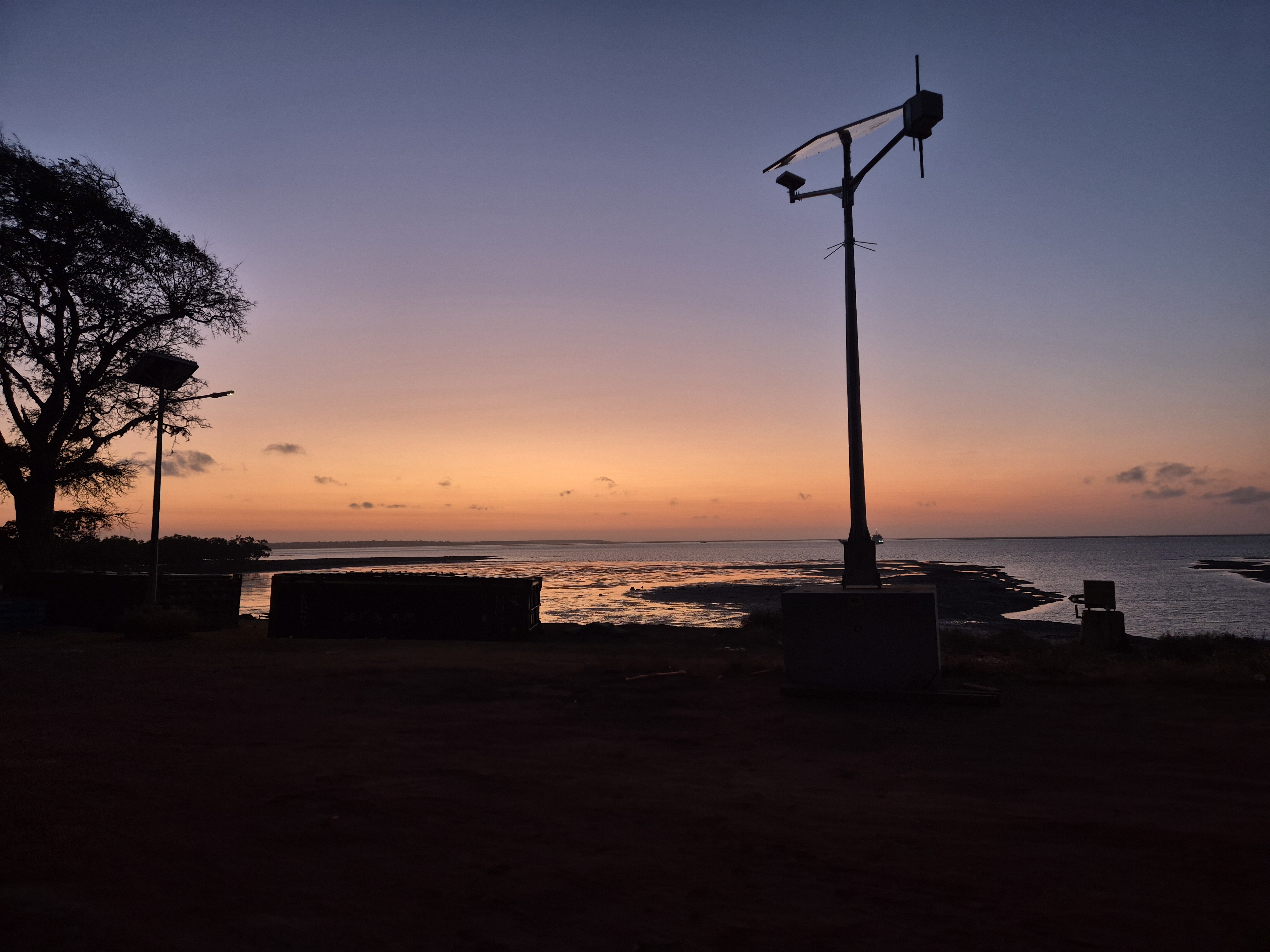
Remote NT Island Emergency Communication Towers
We were engaged to deliver the complete site construction, modular foundation installation, and electrical commissioning of two communications towers on a remote NT island. The project required executing a complex deployment miles away from mainland infrastructure while strictly managing maritime transport and on-site assembly timelines.
We coordinated end-to-end maritime barge logistics to transport heavy structural steel safely to the island site. To bypass the lack of local batching facilities, we utilized pre-engineered modular concrete foundations fabricated in Darwin for rapid, secure anchoring. Following structural erection, we completed full electrical commissioning, integrated robust DC-DC power regulation, and mapped precise GPS coordinates alongside comprehensive field testing to establish an effective emergency communication radius around each tower for the local community.
Both towers achieved seamless structural and electrical sign-off with successful client handover. The deployment delivered a highly reliable, long-range wireless emergency network capable of maintaining stable performance under harsh environmental conditions.
Harsh-Environment Telemetry Enclosure
We were tasked with resolving consistent hardware failures in a fleet of agricultural communication equipment. The units were failing due to a combination of vibration, moisture ingress, and thermal cycling in extreme outdoor conditions.
We re-engineered the housing using high-temperature industrial materials. We redesigned the internal structural architecture to mechanically isolate the sensitive microcontrollers from chassis vibration, ensuring the electronics remained stable regardless of external physical loads.
The revised design achieved complete environmental sealing and structural stability. The client reported zero mechanical-related system failures throughout the subsequent field evaluation period.
Transient Fault Isolation
A client was experiencing intermittent, high-frequency machine shutdowns on a high-pressure hydraulic loop. Standard service tools failed to capture the error, leaving the cause of the downtime unknown.
We deployed multi-channel oscilloscope telemetry directly into the machine's network. By monitoring the system under full operational heat loads, we identified a transient micro-solenoid earthing fault that only manifested during specific duty cycles.
With the root cause identified, we implemented a permanent hardware correction. This eliminated the recurring downtime and provided the client with a clear roadmap for long-term asset reliability.